The KU Mantra and Root Chakra Mantras

To activate the root chakra and the perineum, the Indian mantra LAM is commonly used. In China, the mantra BIN or BING is also used for this area. Another option is the mantra PAI, which has a broader effect, extending from the lower torso downward through the legs.

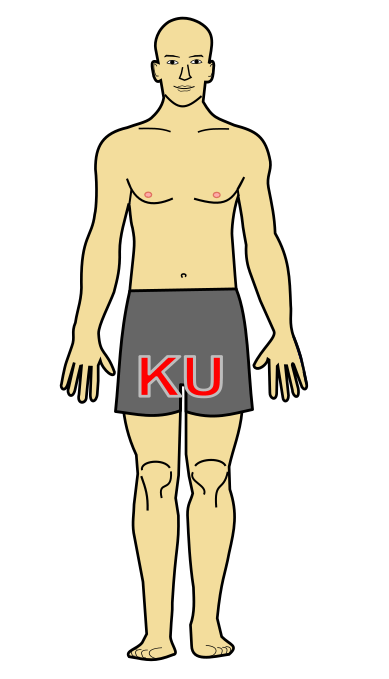
The mantra KU can also be used to stimulate the root chakra and the perineum. When this sound is used, the energy tends to move upward, which means it also partially affects the genital area, the abdomen, and the parts of the legs closest to these chakras. The effects of this mantra are therefore less focused on a single point and more distributed across a wider area.

Can the Term AMEN Be Used as a Mantra?

The word AMEN can certainly be used as a mantra. It is well known that some people use this word as a substitute for the Indian mantra OM or AUM. The root AM is phonetically very similar to AUM. At the same time, the use of the sounds M and N is similar to words such as MANI and MANEE, which are associated with the brain and the head.

For this reason, AMEN is expected to have an effect on the crown chakra, Lalāṭa (the third eye), and Ajna (the brow chakra). We can therefore say that this word may be used at least as a mantra for the head area, provided that one simultaneously focuses attention on this region. Instead of AMEN, one may also use AMN or AMUN, with practically the same effects. Interestingly, AMEN/AMUN is also the Egyptian name of the Creator God.

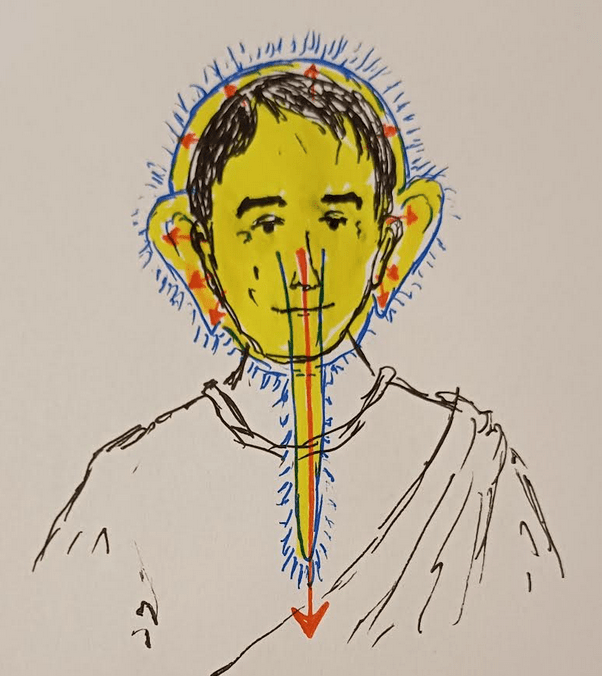
The sound AM causes a strengthening of fresh energy in the head and its expansion outward, while EN causes a downward movement of energy, which typically flows down the front along the central line. Such expansion and movement of energy can create an elephant-like energetic structure in the aura—expanded ears, an enlarged head, and a downward flow that may take the form of an elephant’s trunk. Although I am not a Hindu, I therefore sometimes refer to this mantra as the “mantra of Ganesha”.

When using this mantra in the head area, caution is necessary, as with any form of energetic work involving the head. People with high blood pressure, heart conditions, or mental health issues should not practice it, or should at least ensure that after using the mantra the energy is sufficiently directed downward, at least to the abdomen, so that no sensation of pressure remains in the head.

Mantra YESH

This will be a very concise contribution. The mantra YESH comes from the Jewish personal name Yeshua (Jesus). It represents wholeness, strengthening, amplification, harmony, and development.

A special feature is that the vowel E must be pronounced here as a close-mid front vowel, the so-called “narrow e” (IPA symbol: [e]). English does not have this sound. In German, it can be found for example in the word See, and in French in the word été. You can listen to the pronunciation of this sound on Wikipedia.

That’s it.

Number Code 127954863

In recent decades, number codes have appeared in the family of mantras. Opinions about their usefulness vary, just as the authors and energetic backgrounds of these codes vary. For example, we encounter angelic number codes, Grabovoi codes, the healing code of Zhi Cheng Guo, Energy Balancing by Numbers by Lloyd Mear, and others. Chaldean numerology also includes numerical codes, such as the code for activating harmonious energy in name numbers, which I presented a few months ago. There is also a number code derived from the date of birth, introduced by the Chaldean numerologist Alberto Ferrarese.

The code I am offering you for the New Year 2026 is not related to any of the above. It originates from one of my older codes, which I tested with acquaintances as early as 2017. Its numerological foundation is too complex to go into here, as it operates on nine levels and in some places also takes into account the cubing of numbers. The numbers are mentally spoken in the order in which they appear in the code.

The code is:


127954863

Its function is to activate, harmonize, and release the natural circulation of energy in the meridians of the subtle body, and to strengthen this circulation with environmental energy in order to achieve harmonious development. This is not a magic wand, but a tool with limited reach. This numerical mantra must not be repeated continuously without interruption, as doing so destroys its internal structure. Any error in the sequence of numbers also destroys the internal structure. Over time, the structure is likewise destroyed by writing the code down—for example on paper or on one’s own skin—because the digits may begin to add up into a single number (“fadic number,” “vibratory key”).

Mentally focus on the number 1, then on 2, then on 7, and so on until the final number 3. Then interrupt your concentration for at least 10 seconds and relax. The code can be repeated several times in this way.

Happy New Year!

Boštjan

The mantra YA AH HU SHU

The mantra YA AH HU SHU (yah – a-h/ahh – hoo – shoo) originates from the Divine Name Yahu/YHW (יהו). It is practiced mentally, without vocalization. Breathing should be gentle and, if possible, diaphragmatic (abdominal breathing).

With the first three syllables—YA, AH, and HU—we imagine Divine love flowing toward us. During the mental sound YA (yah), we focus on a point approximately 60 cm (about 2 feet) above the head and inhale. With the sound AH (if pronounced aloud, AH would end with an exhalation; one would exhale into the H), we focus on Kether, or the crown chakra. In other practices, the sound AH may also be associated with the nose or the heart chakra, but here it is used at the top of the head. While performing this sound, we hold the breath for a few seconds, if our physical health allows it. During the exhalation, we focus on the chest and on the mental sound HU (hoo).

We do not want the flow of energy to accumulate in the heart or near it, as the heart is a sensitive organ. Therefore, during the breath retention after the exhalation, we use the sound SHU (shoo) and guide the energy downward. A more specific focal point is not necessary here; instead, we pay attention to relaxing the body, especially the lower part, as this sound is intended to promote calming. The state of breath retention after the exhalation should be practiced in accordance with our physical limitations. Some individuals can hold the breath only for a few seconds, and that is also perfectly fine. Others can hold the breath after exhalation for 30 or 40 seconds, or even for several minutes. For most people, it is not recommended to hold the breath for longer than 40 seconds.

The sounds and the breathing cycle may be repeated several times, according to one’s own feeling. If you do not feel well during the practice, stop it. If you do not feel well afterward, you may return to it after some time. If you still do not feel well after the practice, this exercise may not be suitable for you. More detailed background explanations of this practice or of these mantras will not be provided.

Happy Solstice New Year!
Root Chakra and the PAI Mantra

In India, the root chakra is commonly activated using the mantra LAM. Some Chinese traditions, however, energize this area with the mantra BING. Here, we introduce another mantra: PAI, which also originates from China.

The PAI mantra activates the root chakra while also directing energy downward through the legs. Because of this, it’s not only suitable for stimulating the root chakra, but also for working with the entire lower body. It helps create a stronger connection with the ground and with Mother Earth.

This downward movement of lighter energy through the legs helps avoid the common pitfalls of working with the leg energy centers, where the energy tends to be denser and more intense.

According to esoteric theory, combining root chakra activation with grounding and leg work may help boost immunity. Who knows 😊 — it’s something we can explore and experience for ourselves.

The Lower Dantian and Its Mantras

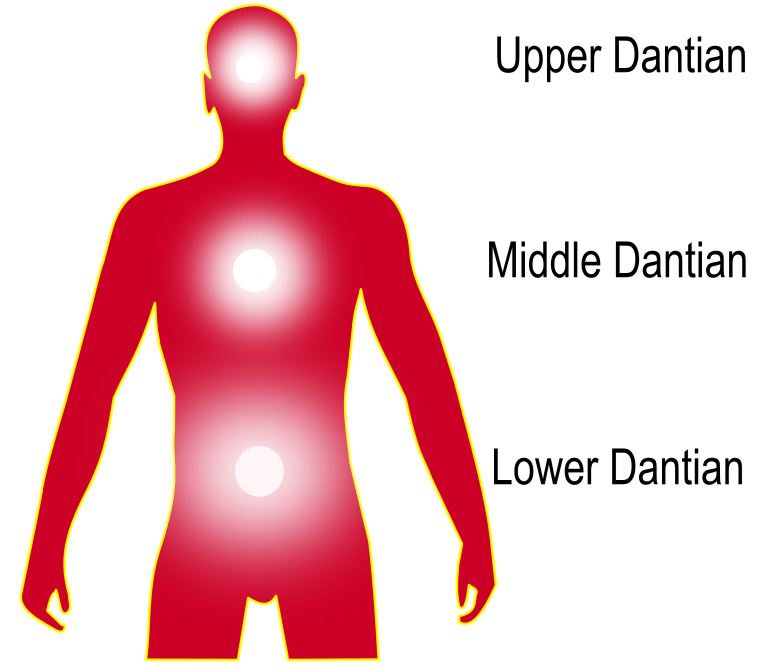
In traditional Chinese spirituality and medicine, the lower dantian is a vital energy reservoir located in the lower abdomen. It is closely associated with several mantras and plays a key role in our connection to life force energy. The lower dantian is linked to the kidneys, to the essence of life known as Jing, and to overall vitality, calmness, and stability. It also serves as an appropriate place to store surplus energy. One can focus attention on the dantian, perform breathing exercises in connection with it, or simply relax and allow the sensation of expansion in that area to unfold. Using mantras is another way to activate it.

In addition to the lower dantian, there are two others: the middle dantian at the level of the chest, and the upper dantian located in the head. However, this piece focuses solely on the lower one.

There are various mantras that can be used with the lower dantian. For example, the Indian mantras VAM (वं) and SITA (सीता) are appropriate, as both are connected to the kidneys, which in turn are associated with the Mingmen and the Dantian. The Buddhist mantra HUM (हूँ)—or in Chinese pronunciation HENG (吽)—is also commonly used in this context. One might also work with the Chinese mantra JUE (劂) or JIAO (pronouncing the letter “J” as a softer version of the English “J”), or a related mantra JIU (九), which literally means the number nine. The mantras TAO and DOU (鬭), which some use in this area, might be variations or distortions of JIAO. Additionally, the mantra SHAO (捎) can be mentally invoked during inhalation.

There are also mantras that guide the flow of energy through a broader area. A good example is the Buddhist OM AH HUM (ॐ आः हूं), which is used to guide energy downward: OM focuses on the head, AH on the heart, and HUM on the abdomen. The Chinese parallel is WENG AR HENG (嗡 啊 吽). Similarly, the Hebrew mantra AMEN (אָמֵן) can be used, where the sound AM corresponds to the head and mirrors OM, while the sound EN can represent the abdomen and the lower dantian.