Vladimir Vladimirovich Putin (born 7 October 1952)
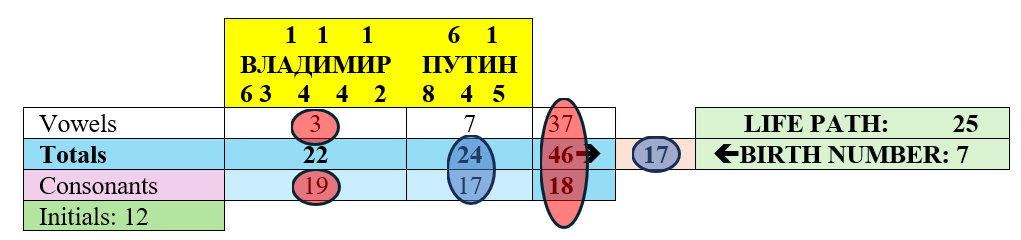
Vladimir Vladimirovich Putin is commonly known simply as Vladimir Putin. His name in Cyrillic script is written as Bладимир Путин. The Cyrillic letters in his name have a direct correlation with Aramaic characters, upon which Chaldean numerology is based, allowing for a straightforward calculation of his fundamental vibration. The longer form of his name, Vladimir Vladimirovich Putin, operates more in the background.
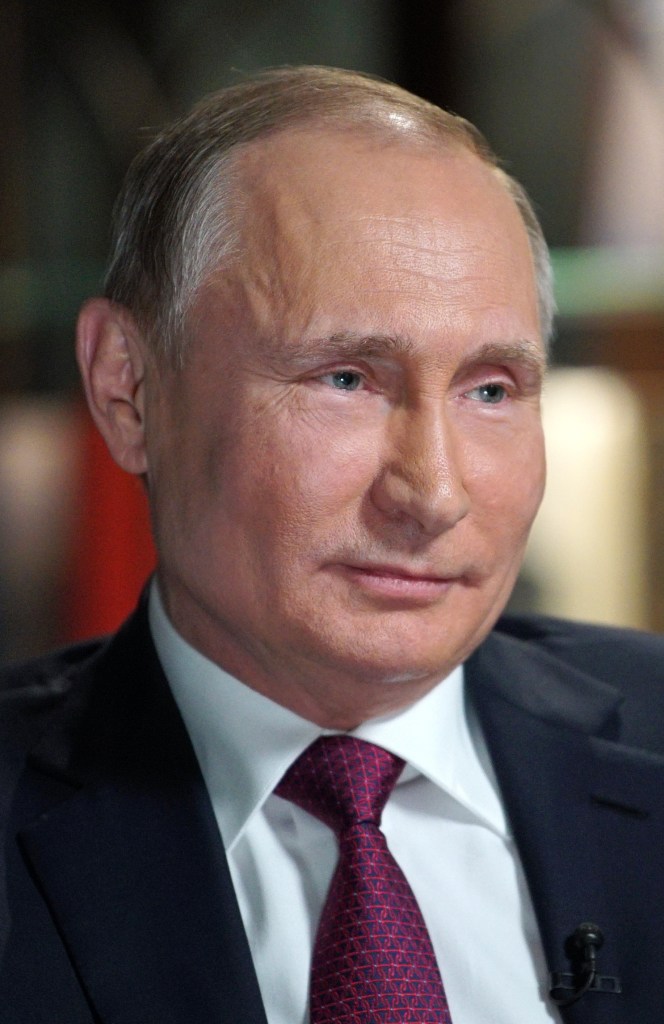
Source: Wikimedia Commons (2018): File:Vladimir Putin (2018-03-01) 03 (cropped).jpg
Born on the 7th of the month, President Putin possesses a natural talent for strategy and analysis. Additionally, his Life Path number, 25, reduces to 7, reinforcing this trait. His total name number is 46, a number often associated with leadership and achievement. The harmonious relationship between his birth date and the total name number provides him with stability and increased potential for success. However, the combination of 46 and 18 can also foster competition and even aggression, sometimes leading to periods of solitude. These two numbers are part of numerical pattern involving numbers with basic digits 1, 3, and 9 (highlighted in red). This pattern signify masculinity, strength, and assertiveness, with 3 and 9 often associated with sport and even militancy. Conversely, numbers with basic digits 6 and possibly 8 (highlighted in blue) suggest a more feminine energy, which is less pronounced in President Putin’s profile. This might help explain his reputation as a strong, assertive leader.
Does Vladimir Putin possess a conquering nature? Certainly. His numerological profile, particularly with the prominence of the root digit 7, indicates a strategic mindset, while numbers from the 1, 3, and 9 group imbue him with masculinity and combativeness. Moreover, his birth date (7th) and the number 18 may be connected with wars and conflict situations. President Putin has demonstrated this capacity through Russia’s past military actions in regions like Chechnya, Crimea, and part of Donbas. As we can see, the extensive Russo-Ukrainian war is currently ongoing. It remains to be seen if Russia will maintain or expand its territorial gains, particularly in the aftermath of the conflict in Ukraine, and whether it can reassert its influence in Central Asia amid China’s growing presence.

 The Mystery of Numbers, Luck, Worlds and Planets