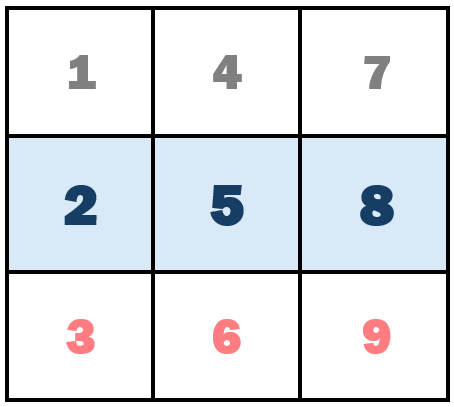
For millennia, humanity lived in tribal and clan societies. Life in these primal communities was simpler, connected with nature and its rhythms. During these times, people allocated roughly equal attention to the various aspects governed by numbers. Numbers 1, 2, and 3 represented flora, 4 represented weaponry, 3 denoted leadership, 5 symbolized communication, 1, 3, and 9 were associated with warriors, 2 and 6 represented females, 2 and 5 represented children, 7 symbolized seers, 8 signified elders, while 3, 5, and 7 were linked with journeys and 9 with territorial boundaries.
THE WORLDS OF EARLY STATES, ANTIQUITY, AND FEUDALISM
This equilibrium shifted with the rise of ancient states and feudal domains, where land became a pivotal measure. Numbers closely associated with land, particularly 3, 6, and 9, as well as 8, held prominence during antiquity and feudalism. The surge in trade, hedonism, and slave commerce in the Hellenistic and Roman worlds elevated the significance of numbers 1 through 4 (representing individualism) and partially 5 (representing knowledge and commerce). However, in Europe, the focus reverted to the “land numbers” of 3, 6, 8, and 9. During this era, these numbers asserted their paradigms more effortlessly, with knights represented by 3 and 9, ladies and court by 6, clergy by 3 and 8, bankers by 6 and 8, soldiers by 3, judges by 3, 6, and 8, and serfs by 8. During this period, the number 17, particularly among the number 8, was considered auspicious for fame and success. Similarly, the number 21, regarded as fortunate in antiquity, became a symbol of utmost fortune in the French tarot since at least the 18th century. However, the entrenched feudal structure persisted until the 19th century, buoyed by the enduring importance of agriculture and tradition, where numbers 3, 6, 8, and 9 retained their significance. This status quo prevailed until the advent of major social and technological revolutions (4).
THE MODERN WORLD
The birth of the consumer society in the 20th century marked the triumph of individualism (1-4) and rapid trade (5). By the close of the 20th century, this trend reached its zenith. Political discourse encompassed topics such as drug legalization, same-sex families, and philosophers openly deliberated on pedophilia, while the avant-garde youth established squats – all emblematic of revolutionary themes (4). The realm of commerce witnessed the advent of “just in time” warehousing (5 encroaching into territory traditionally governed by the number 8). Today, robotics, automation (4 and 5) are followed, along with globalization, which threatens borders (9) and old traditions (3, 8). Women are losing their feminine allure (dominated by 6), while men doesn’t pursue women’s hearts as knights and warriors (dominated by 3 and 9) so often. Changes occur swiftly, time is running out so fast, and numbers indicative of change and instability dominate this world (2, 4, 5, and 7). With the rise of Ronald Reagan and Margaret Thatcher, the seeds of the neoliberal world were sown, culminating in the reign of numbers 1, 2, 4, 5, and 7. Conversely, numbers 3, 6, 8, and 9 find themselves in a position of opposition and defensiveness for the first time in the last 5,000 years, in accordance with the historical trajectory of states.
LUCKY AND UNLUCKY NUMBERS OF OUR TIME
As a result, the prospects of certain numbers have improved or worsened. It would be challenging to argue that individuals with numbers 1, 2, 4, 5, and 7 universally benefit from the advent of the neoliberal world. Rapid changes induce stress even among fast numbers (2, 7, 5, and occasionally 6), heightening their instability. Similarly, number 10 and its multiples (19, 28, 37, etc.) may also exhibit instability. If we were to identify a number among the new ruling numbers whose prospects for success have increased recently, number 28 would be a likely candidate. Number 28 often thrives in fast-paced businesses, but success in the realm of realationships appears elusive for most individuals with this number. The decline of traditional family structures and the rise of short-term perspectives in modern professions have rendered many long-term considerations obsolete – a reality that affects not only number 28 but all numbers alike. However, in the long run, the number 28 still tends to encounter problems. Number 28 also boasts certain advantages in our “new world order”– it is often associated with intelligence and initial success in projects. Thus, many individuals with this number may indeed lead happier lives, provided they engage in professions of the modern era, where speed and adaptability are paramount. Conversely, traditional occupations may prove less conducive to the happiness of individuals with the number 28.
The losers of this new era are primarily found among numbers indicative of karmic trials (especially 4 and 8, albeit to a lesser extent 2 and 7) and the group comprising numbers 3, 6, 8, and 9. Number 4, despite its association with depression and impulsivity, finds its footing in this changing world by carving out new paths. Furthermore, it appears that the perception of number 13 in Chaldean numerology has evolved over the past century, no longer solely representing death, misfortune, and suffering but increasingly symbolizing opportunities for transformation and change. Cheiro already treats it as conditionally fortunate, but also describes its potential difficulties and trials:
13. This is a number indicating change of plans, place, and such-like, and is not unfortunate, as is generally supposed. In some of the ancient writings it is said, “He who understands the number 13 will be given power and dominion ” It is symbolized by the picture of “a Skeleton” or “Death,” with a scythe reaping down men, in a field of new-grown grass where young faces and heads appear cropping up on every side It is a number of upheaval and destruction. It is a symbol of “Power” which if wrongly used will wreak destruction upon itself. It is a number of warning of the unknown or unexpected, if it becomes a “compound” number in one’s calculations.
(Cheiro (1935): Cheiro’s Book of Numbers. London, Herbert& Jenkins.)
I wonder if this still holds true in this tumultuous world. Is the current suffocating development too overwhelming even for individuals with numbers 4 and 13? Do they possess the resilience required to weather such storms? Number 4 is often associated with depression and impulsiveness, so I recommend increased caution regarding the number 13.
In contrast, number 9 possesses resilience and remains indispensable, being the sole representative (as soldiers and doctors) among the numbers 3, 6, 8, and 9 that neoliberal systems still rely upon. This likely explains the absence of significant changes in these numbers. Conversely, number 2 is inherently sensitive, and genuine instances of happiness among twos between numbers 1 and 52 are rare. Thus, we are left with numbers 3, 6, 7, and 8. Among these, “lucky” numbers such as 21, 25, 34 and 17 often face trials before achieving success. However, in the contemporary world, characterized by frequent changes in projects and career paths, individuals with these numbers often struggle to attain success, but often do not reach the success stage.
Numbers 25 and even 34 appear to be mildly unfavorable in the current landscape. These numbers are sensitive and possess internal structures that exacerbate challenges in the modern era, resulting in unfavorable outcomes. Consequently, they fare poorly. Conversely, number 21 currently appears neutral. Individuals with number 21 are advised to pursue stable professions while seeking solace in God and Divine spirituality. Thus, this number can still bring happiness under the right circumstances.
However, number 17 presents challenges, as its inner structure is ill-suited for the neoliberal era, undermining prospects for sustained career development. Generally, number 17 evokes unhappiness for most individuals, exacerbated by encounters with number 4, which lead to difficulties, transgressions, and unbalanced sexuality. It’s also better not to encounter another eight (nor is encountering another 17 recommended). This represents a 22% chance of encountering the values 4 and 8 in the neighboring number. And they can be encountered in other name numbers, in consonants, and in the number of zodiacal periods. So, the final conclusion is: number 17 works unfavorably for the vast majority of people, only occasionally favorably. Especially for people for whom mostly unfavorable things happen on the 4th, 13th, 22nd, 31st day of the month or on the 8th, 17th, and 26th day of the month, I advise them to avoid this number if possible.
Similarly, number 15 faces similar challenges, particularly when encountering numbers 4 or 8, resulting in adverse effects such as depression, adversity, and even poverty. The deterioration of perspectives for the number 6 certainly worsens the potentials of all sixes. Here too, there is a 22% chance of encountering these values in the neighboring number. And they can be encountered in other name numbers, in consonants, and in the number of zodiacal periods, just like with the number 17. Hence, number 15 tends to work unfavorably, especially during the neoliberal era.
At present, there is no indication of an inevitable societal transformation in the near future. The neoliberal system is poised to endure for decades to come. For individuals with numbers 3, 6, 8, and 9, strengthening personal resilience remains a viable solution. This can be achieved by harmonizing the triad 3-6-9 in names and dates to consolidate personal power. This is may be achieved by appropriately combining numbers 3, 6 and 9, so that all three numbers are present and connected in the name and dates.
Thank you for reading,
Boštjan Lovrat
 The Mystery of Numbers, Luck, Worlds and Planets