Today I’m writing my first and last article in September, as I’ll be unavailable for several weeks. This post discusses compound numbers above 52. In Chaldean numerology, numbers above 9 are usually described only up to the value of 52.
When it comes to numbers higher than that, numerologists often differ quite a lot in their interpretations. Some even just add up the digits in the number—for example, 89 would be interpreted as 8+9=17. Others reverse the digits, claiming that 71 carries the same meaning as 17. But here lies a big trap! The number 34 does not share the same meaning as 43, nor does 25 equal 52. The number 32 is less favorable than 23. The number 31 contains digits that, when reversed, form 13. However, 31 does not carry the meaning of 13! So why should it be any different with numbers above 52? That’s why I advise against using such approaches.
Cheiro described a system of numbers up to 52. For numbers above 52, it’s incorrect to apply the rule of reversed digits (for example, 71, the number “Reaper,” is not the same as 17, the number “Star”), and the rule of adding digits doesn’t always work (65, “Royal Star of the Scorpion,” is not the usual 11, “Force,” but rather a special form of 11).
This raises the question of how Cheiro approached numbers above 52. There are two possibilities. The first is that the Chaldean tarot, which describes the first 78 numbers, does not provide reliable interpretations for numbers beyond 52, so Cheiro may have simply left them out. The second possibility is that numbers above 52. According to the second possibility, numbers above 52 are explained by a series of numbers with the same base number, which follow each individual number with a “distinct potency of its own.” This approach also provides an explanation for numbers from 79 to 99.
Cheiro explained that number “_ has the same meaning as the number _ , which is next to it in its own series of compound numbers.” However, Cheiro extends the influence of numbers with a distinct potency of their own to numbers from 42 onwards. According to Cheiro’s rule of the Chaldean tarot, each number without a “distinct potency of its own” takes on the meaning of the nearest preceding number that has this distinct potency, based on the series of numbers with the same base number. This rule applies up to number 52.
It’s important to note that Cheiro also acknowledged some numbers above 52 that have a “distinct potency of their own.” He used the numbers 55 (“Sword“) and 69 (“The Crown of Mars“), which he took from Kabbalistic astrology. Thus, he was certainly aware of the significance of numbers 65 and 71, too. If we extend Cheiro’s rule about numbers having a nature similar to that of a number with a distinct potency of its own to numbers above 52, we obtain the following pattern:
Base number 1: 28; 37 ≈ 46; 55 ≈ 64 ≈ 73 ≈ 82 ≈ 91;
Base number 2: 29 ≈ 38≈ 47≈ 56; 65 ≈ 74 ≈ 83 ≈ 92;
Base number 3: 30 ≈ 39 ≈ 48 ≈ 57 ≈ 66 ≈ 75 ≈ 84 ≈ 93;
Base number 4: 31 ≈ 40 ≈ 49 ≈ 58 ≈ 67 ≈ 76 ≈ 85 ≈ 94;
Base number 5: 23; 32 ≈ 41 ≈ 50 ≈ 59 ≈ 68 ≈ 77 ≈ 87 ≈ 95;
Base number 6: 24 ≈ 33 ≈ 42; 51 ≈ 60; 69 ≈ 78 ≈ 87 ≈ 96;
Base number 7: 25 ≈ 34; 43 ≈ 52 ≈ 61 ≈ 70 ≈ 79 ≈ 88 ≈ 97;
Base number 8: 26 ≈ 35 ≈ 44 ≈ 53 ≈ 62; 71 ≈ 80 ≈ 89 ≈ 98;
Base number 9: 27 ≈ 36 ≈ 45 ≈ 54 ≈ 63 ≈ 72 ≈ 81 ≈ 90 ≈ 99.
Compared to traditional Chaldean numerology, these values don’t always align. Even within numbers up to 52, there are questionable examples. For instance, the numbers 39 and 48 carry a strong influence from the number 12 and seem more closely related to the characteristics of 12 than to the number 30. Notably, numerologists Pandit Sethuramanand Gerun Moore reverted to the association with the number 12 for these two numbers. I also consider their nature to be that of the number 12. Similar cases can be found among numbers above 52.
Therefore, approach Cheiro’s expanded rule with caution. As mentioned, this is just one of two possible ways Cheiro may have dealt with numbers above 52. Personally, I don’t trust this approach and don’t use it. It is presented here as a third option, alongside the rule of reversed digits and the rule of adding digits.
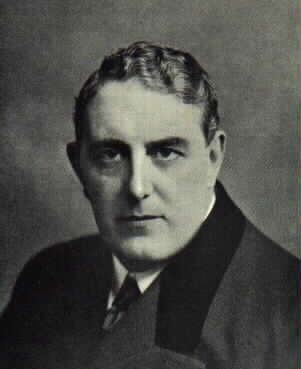
In 1926, Cheiro published the “Book of Numbers,” in which he defined compound numbers (also known as fadic numbers) from 10 to 52. The descriptions I summarize here are taken from the English edition published in 1935.
The descriptions correspond in large part to very old writings on Chaldean numerology, and in part to the theory of the Tarot. However, these are not modern Tarot descriptions like those found in the works of Etteilla and others, but rather a sort of Chaldean Tarot. Some of the descriptions are also taken from the writings of Isidore Kozminsky. Based on some of Cheiro’s statements about ancient traditions, there is a reasonable suspicion that Cheiro was not the author of these descriptions. Cheiro was primarily a numerologist, astrologer and palmist, and does not seem to have dealt with the tarot in any depth. Moreover, the Tarot descriptions extend up to 78. In the modern Chaldean tradition and in the Chaldean tarot, we also know of descriptions of numbers beyond 52, specifically 55, 65, 69 and 71 (see Sepharial’s descriptions of numbers).
All the above increases the doubt about his authorship of these descriptions. On the other hand, Cheiro indicates in some of his writings that he knows at least the specific meaning of the numbers 55 and 69. The fact is that Cheiro’s descriptions have no connection with Indian tradition, although Cheiro made exaggerated claims to have received his knowledge of numerology from Indian Brahmins. In fact, all the numbers described are found in the traditions of Antiquity and in the Tarot.
So, the question of who the actual author might have been remains open. On the one hand, it could have been a person from the English high society who, due to his or her good name, did not want to become publicly associated with numerology. Engaging in occult sciences was considered inappropriate among the English nobility. Or it could simply have been a somewhat shy person who did not wish to be publicly exposed. There is some possibility, however, that this was a hidden passion of Cheiro’s, and that he therefore made the choice of descriptions in the first place.
In any case, these descriptions have been an important guide for most Chaldean numerologists since 1926. Some of these descriptions may not be the most accurate, and some numbers that are defined as lucky may be unlucky in some situations. Nevertheless, these descriptions are an important starting point when one is learning modern Chaldean numerology.
Many of today’s Chaldean numerologists seek strange solutions for numbers above 52. Where possible, it is suggested that the digits of the numbers simply be reversed and the meaning of the reversed numbers up to 52 be applied. For example, 53 is like 35 (and thus 26), 54 to 45 (and thus 27) … This is a completely misguided approach, as even the descriptions of numbers up to 52 do not allow for such digit reversals. The number 12 does not have the same meaning as the number 21, nor does the number 31 have the same meaning as 13. Likewise, 15 and 51 are different, as are 25 and 52, and 34 and 43. When reversing digits does not yield numbers with a value between 10 and 52, it is suggested that the digits simply be added together. Thus, 65 would be the usual 11, and 69 would be the usual 15. However, the modern Chaldean tradition shows that the number 65 has a somewhat different nature than the usual number 11, and the same is true for the relationship between the numbers 69 and 15.
In any case, you can check Cheiro’s descriptions in the continuation of this article.
***
Source: Cheiro (1935). The Cheiro’s Book of Numbers. London, Herbert Jenkins Limited. Pages 126-133.
10. Symbolised as the “Wheel of Fortune.” It is a number of honour, of faith and self-confidence, of rise and fall; one’s name will be known for good or evil, according to one’s desires; it is a fortunate number in the sense that one’s plans are likely to be carried out.
11. This is an ominous number to occultists. It gives warning of hidden dangers, trial, and treachery from others. It has a symbol of “a Clenched Hand,” and “aLion Muzzled,” and of a person who will have great difficulties to contend against.
12. The symbolism of this number is suffering and anxiety of mind. It is also indicated as “the Sacrifice” or “the Victim” and generally foreshadows one being sacrificed for the plans or intrigues of others.
13. This is a number indicating change of plans, place, and such-like, and is not unfortunate, as is generally supposed. In some of the ancient writings it is said, “He who understands the number 13 will be given power and dominion.” It is symbolised by the picture of “a Skeleton” or “Death,” with a scythe reaping down men, in a field of new-grown grass where young faces and heads appear cropping up on every side. It is a number of upheaval and destruction. It is a symbol of ” Power” which if wrongly used will wreak destruction upon itself. It is a number of warning of the unknown or unexpected, if it becomes a “compound” number in one’s calculations.
14. This is a number of movement, combination of people and things, and danger from natural forces, such as tempests, water, air, or fire. This number is fortunate for dealings with money, speculation, and changes in business, but there is always a strong element of risk and danger attached to it, but generally owing to the actions and foolhardiness of others. If this number comes out in calculations of future events the person should be warned to act with caution and prudence.
15. This is a number of occult significance, of magic and mystery; but as a rule it does not represent the higher side of occultism, its meaning being that the persons represented by it will use every art of magic they can to carry out their purpose. If associated with a good or fortunate single number, it can be very lucky and powerful, but if associated with one of the peculiar numbers, such as a 4 or an 8, the person it represents will not scruple to use any sort of art, or even ” black magic,” to gain what he or she desires. It is peculiarly associated with “good talkers,” often with eloquence, gifts of Music and Art and a dramatic personality, combined with a certain voluptuous temperament and strong personal magnetism. For obtaining money, gifts, and favours from others it is a fortunate number.
16. This number has a most peculiar occult symbolism. It is pictured by “a Tower Struck by Lightning from which a man is falling with a Crown on his head.” It is also called “the Shattered Citadel.” It gives warning of some strange fatality awaiting one, also danger of accidents and defeat of one’s plans. If it appears as a “compound” number relating to the future, it is a warning sign that should be carefully noted and plans made in advance in the endeavour to avert its fatalistic tendency.
17. This is a highly spiritual number, and is expressed in symbolism by the 8-pointed Star of Venus: a symbol of “Peace and Love.” It is also called “the Star of the Magi” and expresses that the person it represents has risen superior in spirit to the trials and difficulties of his life or his career. It is considered a “number of immortality” and that the person’s name “lives after him.” It is a fortunate number if it works out in relation to future events, provided it is not associated with the single numbers of fours and eights.
18. This number has a difficult symbolism to translate. It is pictured as “a rayed moon from which drops of blood are falling; a wolf and a hungry dog are seen below catching the falling drops of blood in their opened mouths, while still lower a crab is seen hastening to join then.” It is symbolic of materialism striving to destroy the spiritual side of the nature. It generally associates a person with bitter quarrels, even family ones, also with war, social upheavals, revolutions; and in some cases it indicates making money and position through wars or by wars. It is, however, a warning of treachery, deception by others, also danger from the elements, such as storms, danger from water, fires and explosions. When this ‘’compound” number appears in working out dates in advance, such a date should be taken with a great amount of care, caution, and circumspection.
19. This number is regarded as fortunate and extremely favourable. It is symbolised as “the Sun” and is called “the Prince of Heaven.” It is a number promising happiness, success, esteem and honour, and promises success in one’s plans for the future.
20. This number is called “the Awakening”; also “the Judgment.” It is symbolised by the figure of a winged angel sounding a trumpet, while from below a man, a woman, and a child are seen rising from a tomb with their hands clasped in prayer. This number has a peculiar interpretation: the awakening of new purpose, new plans, new ambitions, the call to action, but for some great purpose, cause or duty. It is not a material number and consequently is a doubtful one as far as worldly success is concerned. If used in relation to a future event, it denotes delays, hindrances to one’s plans, which can only be conquered through the development of the spiritual side of the nature.
21. This number is symbolised by the picture of “the Universe,” and it is also called “the Crown of the Magi.” It is a number of advancement, honours, elevation in life, and general success. It means victory after a long tight, for “the Crown of the Magi” is only gained after long initiation and tests of determination. It is a fortunate number of promise if it appears in any connection with future events.
22. This number is symbolised by “a Good Man blinded by the folly of others, with a knapsack on his back full of Errors.” In this picture he appears to offer no defence against a ferocious tiger which is attacking him. It is a warning number of illusion and delusion, a good person who lives in a fool’s paradise; a dreamer of dreams who awakens only when surrounded by danger. It is also a number of false judgment owing to the influence of others. As a number in connection with future events its warning and meaning should be carefully noted.
23. This number is called “the Royal Star of the Lion.” It is a promise of success, help from superiors and protection from those in high places. In dealing with future events it is a most fortunate number and a promise of success for one’s plans.
24. This number is also fortunate; it promises the assistance and association of those of rank and position with one’s plans; it also denotes gain through love and the opposite sex; it is a favourable number when it comes out in relation o future events.
25. This is a number denoting strength gained through experience, and benefits obtained through observation of people and things. It is not deemed exactly “lucky,” as its success is given through strife and trials in the earlier life. It is favourable when it appears in regard to the future.
26. This number is full of the gravest warnings for the future. It foreshadows disasters brought about by association with others; ruin, by bad speculations, by partnerships, unions, and bad advice. If it comes out in connection with future events one should carefully consider the path one is treading.
27. This is a good number and is symbolised as “the Sceptre.” It is a promise of authority, power, and command. It indicates that reward will come from the productive intellect; that the creative faculties have sown good seeds that will reap a harvest. Persons with this “compound” number at their back should carry out their own ideas and plans. It is a fortunate number if it appears in any connection with future events.
28. This number is full of contradictions. It indicates a person of great promise and possibilities who is likely to sec all taken away from him unless he carefully provides for the future. It indicates loss through trust in others, opposition and competition in trade, danger of loss through law, and the likelihood of having to begin life’s road over and over again. It is not a fortunate number for the indication of future events.
29. This number indicates uncertainties, treachery, and deception of others; it foreshadows trials, tribulation, and unexpected dangers, unreliable friends, and grief and deception caused by members of the opposite sex. It gives grave warning if it comes out in anything concerning future events.
30. This is a number of thoughtful deduction, retrospection, and mental superiority over one’s fellows, but, as it seems to belong completely to the mental plane, the persons it represents are likely to put all material things on one side – not because they have to, but because they wish to do so. For this reason it is neither fortunate nor unfortunate, for either depends on the mental outlook of the person it represents. It can be all powerful, but it is just as often indifferent according to the. will or desire of the person.
31. This number is very similar to the preceding one, except that the person it represents is even more self-contained, lonely, and isolated from his fellows. It is not a fortunate number from a worldly or material standpoint.
32. This number has a magical power like the single 5, or the “compound” numbers 14 and 23. It is usually associated with combinations of people or nations. It is a fortunate number if the person it represents holds to his own judgment and opinions; if not, his plans are likely to become wrecked by the stubbornness and stupidity of others. It is a favourable number if it appears in connection with future events.
33. This number has no potency of its own, and consequently has the same meaning as the 24- which is also a 6- and the next to it in its own series of “compound” numbers.
34. Has the same meaning as the number 25, which is the next to it in its own series of “compound” numbers.
35. Has the same meaning as the number 26, which is the next to it in its own series of “compound” numbers.
36. Has the same meaning as the number 27, which is the next o it in its own series of “compound” numbers.
37. This number has a distinct potency of its own. It is a number of good and fortunate friendships in love, and in combinations connected with the opposite sex. It is also good for partnerships of all kinds. It is a fortunate indication if it appears in connection with future events.
38. Has the same meaning as the number 29, which is the next to it in its own series of “compound” numbers.
39. Has the same meaning as the number 30, which is the next to it in its own series of “compound” numbers.
40. Has the same meaning as the number 31, which is next to it in its own series of “compound” numbers.
41. Has the same meaning as the number 32, which is next to it in its own series of “compound” numbers.
42. Has the same meaning as the number 24.
43. This is an unfortunate number. It is symbolised by the signs of revolution, upheaval, strife, failure, and prevention, and is not a fortunate number if it comes out in calculations relating to future events.
44. Has the same meaning as 26.
45. Has the same meaning as 27.
46. Has the same meaning as 37.
47. Has the same meaning as 29.
48. Has the same meaning as 30.
49. Has the same meaning as 31.
50. Has the same meaning as 32.
51. This number has a very powerful potency of its own. It represents the nature of the warrior; it promises sudden advancement in whatever one undertakes; it is especially favourable for those in military or naval life and for leaders in any cause. At the same time it threatens enemies, danger, and the likelihood of assassination.
The interpretations of compound numbers, as described in Sepharial‘s work ‘Your Fortune in Your Name or Kabalistic Astrology‘ (revised edition from 1909), had a significant influence on Isidore Kozminsky and Cheiro, thereby shaping the development of modern Chaldean numerology. Sepharial delineates these compound numbers within the framework of 32 ‘Points of Departure,’ which correspond to individual tarot arcana.
The basics of the descriptions stem from Kabbalistic astrology as defined by Sepharial’s predecessors. The descriptions of the arcana up to and including arcana IX are not provided here, as they appear to be heavily influenced by the Pythagorean numerologist John Heydon.
The descriptions of the other arcana are as follows:
X (10). Elevation from a humbler position; or fall from a higher position; reversals; auguries, future events.
XI (11). Success in some bold enterprises; courage; decision; energy.
XII (12). Reversal of position; culpability; chastisement; loss of honour; danger of violent death; either enforced or voluntary; dangers from women; catastrophe.
XIII (13). Ambitions and hopes deceived; destruction; undoing, new beginnings; death; fatality.
XIV (14). Danger to the position through lack of initiative and decision; danger through the force of the elements; sexuality.
XV (15). Fate; the inevitable; dangers to the offsprings and struggles in the marriage state; luxury.
XVI (16). Overthrow; ruin; catastrophe; accidents; falls; dangers of the elements.
XVII (17). Hope, favourable, or the reverse, according to the position of this point in the horoscope; uncertainty; insight; visions.
XVIII (18): Crosses in love; false sense of security; unprofitable associations with women; hidden perils; treacheries; deceptions.
XIX (19). Good fortune; successful marriage; honours; glory; reputation; happy associations.
XX (20). Fatal destiny; continual hindrances and obstacles arising in the life; inevitable decisions; unexpected elevation.
XXI (21). Dignities; honors; success; aspirations.
XXII (22). Blind presumption; success followed by loss; entrapment; willful injury; final catastrophe; folly.
XXIII (23). Royal star of Leo. Protection and favor of persons in authority; celebrity; success.
XXIV (24). Confers the association of persons of high birth, and gives success through women of position.
XXV (25). High offices under protection; success through contest; power acquired by experience; the fruits of action.
XXVI (26). Ruined by unfruitful enterprises, or by bad combinations; bad use of the faculties; money-grubbing.
XXVIII (28). Rivals in enterprises; injuries by opponents; need of vigilance; loss of the fruits of labor; evil associations.
XXXVII (37). Royal star of Taurus. Union; marriage; protection of ladies in position; goodwill; sincere friendship; success through associations with the opposite sex.
XLIII (43). Point of Reaper. Destruction; abortive enterprises; things brought to nothing; annihilation.
LI (51). Royal star of Aquarius. Fortuitous elevation; martial tendencies; powerful enemies; troubles through Mars men.
LV (55). The Sword. Triumph; victory over difficulties; a protection and yet a menace; may chastise as it may confer honours; energy.
LXV (65). Royal star of Scorpio. Powerful enemies; wounds; dangers; gives also protection of rich persons, and a good marriage.
LXIX (69). Mars crowned. Great fortune; reputation; honors by merit.
LXXI (71). The Reaper. Dangers to the body and the interests; executive powers.
 The Mystery of Numbers, Luck, Worlds and Planets