2, 5 and 8: Emotions, Emotions…

According to ancient tradition, the numbers 2, 5, and 8 are closely linked to emotions. Additionally, number 6 (associated with Venus) is also considered emotional. Numbers 2 and 6 represent a softer, more sensitive, feminine aspect, while number 7 leans towards the masculine side of the Moon and isn’t always emotionally driven.

The three numbers 2, 5, and 8 are found in the basic numerical square:
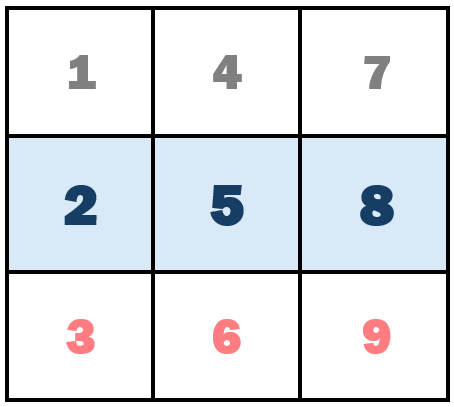
Initially, the upper numbers have a spiritual essence but often shift towards mental and material concerns, with number 7 attempting to reconnect with the realm of the mind. Conversely, the lower numbers start as material and tend to ascend towards the spiritual and mental realms.

The middle numbers 2, 5, and 8 signify relationships and the pursuit of balance- they are inherently tied to emotional states. Number 2 represents the Moon and connections with others, number 5, linked to Mercury, governs rationalizations, while number 8 symbolizes suffering, encompassing feelings of depression and sadness.

This emotional aspect is also evident in variations of these numbers, such as 17 and 23. Traditional interpretations of 17 don’t always emphasize its emotional aspects unless it combines with numbers resulting in 4, leading to challenges like sins and sexual transgressions, and subsequently, emotional turmoil. On the other hand, 17, being associated with Saturn, often reflects sorrow and depression, thus indicating emotional tendencies. Similarly, Number 23 is traditionally considered one of the happiest numbers, accompanied by great blessings and prosperity,  yet it may bring challenges and sadness in family life. Hence, the emotional component is explicitly highlighted.

In modern numerology, Sepharial defined arcane XVII (17) numerologically as:  »Hope, favourable; or reverse, according to the position of this star in the horoscope.; uncertainty, insight, visions.«[1] Cheiro, three decades later, expanded on these meanings considerably: »This is a highly spiritual number, and is expressed in sybolism by the 8-pointed Star of Venus: a symbol of “Peace and Love.” It is also called “the Star of the Magi” and expresses that the person it represents has risen superior in spirit to the trials and difficulties of his life or his career It s considered a “number of immortalityand that the person’s name “lives after him .” It is a fortunate number if it works out in relation to future events, provided it is not associated with the single numbers of fours and eights.«[2]

None of these two interpretations specifically mention the possibility of emotional troubles.

Sepharial defined arcane XXIII (23) merely as: »Royal Star of Lion. Protection and favour of persons in authority; celebrity; success[3] Cheiro later expanded this meaning to: »This number is called “the Royal Star of the Lion.” It is a promise of success, help from superiors and protection from those in high places. In dealing with future events it is a most fortunate number and a promise of success for one’s plans[4]

In today’s fast-paced world individuals with numbers like 5 may face a lot of stress. Life also moves too fast for people from the group 3, 6, 8, and 9. Numbers 6 and 8 may face heightened emotional challenges due to life’s rapid evolution. This also implies more emotional challenges for people with numbers 17 and 23. Therefore, it would be expected that numerologists will eventually start writing more about this. Numerous other interpretations from contemporary American and Indian numerologists had been reviewed, but I have not found any definitions regarding the emotional lives of people with these numbers. The definitions of all these numerologists largely echo modern interpretations of Sepharial and Cheiro.

However, some answers are found among Slovenian numerologists. Bono Baršek says: “So far… I have not met anyone with the number 17 who has truly succeeded in finding love and happiness. Instead, it’s a number of great troubles and misfortunes in love.[5] Regarding the number 23, Baršek says, “These people have a strange attitude toward love life, so it is not necessarily their happiest aspect.[6] And Taja Veroti-Tjaša claims that if persons with 23 as birth date listen to the advice of others, this also brings sadness to them..[7]

Thank you for reading,

Boštjan Lovrat


[1] Sepharial (1909): Your Fortune in Your Name or Kabalistic Astrology. London, Willian Rider & Son, Ltd. Page 30. First published in 1894.

[2] Cheiro (1935): Cheiro’s Book of Numbers. London, Herbert& Jenkins. Page. 128. First published in 1926.

[3] Sepharial (1909): Page 31.

[4] Cheiro (1935): Page 130.

[5] Baršek, Bono (1996): Resnice življenja. Nazarje, Bele Dobletina, Nazarje. Page 105.

[6] Baršek (1996): Page. 107.

[7] Veroti, Taja- Tjaša (2005). (Po)moč numerologije. Ljubljana, Self-published. Page 56.

Modern “Chaldean alphabet”: Adapted Aramaic and Hebrew alphabets for the Latin script

In the Chaldean tradition, there exist 22 primary phonetic vibrations corresponding to individual sounds. When drawing parallels with Latin characters, in certain instances, the conversion of these ancient sounds uses multiple Latin letters, such as in the fifth position where we encounter the letters E and H. Some ancient phonetic positions have remained unused in the European adaptation, for instance, the 18th position housing the sound Tsadi (TS). In the most prevalent contemporary adaptation of Chaldean script to the Latin alphabet, only the letter values are employed. Although phonetic values serve as the foundation for establishing relationships between letters and vibrations, we are unconcerned with pronunciation specifics (e.g., in French, English or Italian, or any language utilizing the Latin script).

Adaptation of Western Semitic alphabets for the Latin script

Classical analyses work with letters, which are depicted in black in the table. Among these letters, it’s noticeable that the letter S holds a value of 3, despite its closer phonetic association with another sound S (Samekh), which carries a value of 6. This discrepancy arises from the inherent strength of the written form over the phonetic one.

Conversely, one might expect the letter F to potentially carry the value of 6, as it evolved from the sound and letter Waw, associated with the sounds V and W. Nevertheless, analyses indicate that the correct numerical value of this letter is 8.

The letter C also holds connections with the number 2, while the letter H is linked to the number 8. There exists a specific rule governing the circumstances under which these values can be applied.

As for the letter X, which is denoted in green within the table, it is predominantly interpreted today as K+S=2+3=5. However, some perceive it as Samekh or as G+S=3+3=6, in which case it’s positioned phonetically as S, with a value of 6.

Letters marked in red are derivatives of the basic system. Unfortunately, in certain instances (designated with *), values are duplicated. For instance, if the word with Ö can also be written with OE, we obtain values 7 and 12. Similarly, if the word with Ä can also be writen by AE, we obtain values 1 and 6. Likewise, if the word with Ü can also be writen with UE, the values used are 6 and 11.

Letter Ë appears to carry a value of 5. The Croatian letter Đ poses an even greater puzzle; among Croatian numerologists, there is no consensus regarding its numerical value.

Chaldean numerologist Cheiro, lacking familiarity with the Aramaic alphabet, popularized the idea in 1926 that the Chaldeans did not assign any letter to the number 9. He argued instead that the number 9 was so sacred to the Chaldeans that they refrained from assigning it any letter. However, historical evidence shows that the Chaldeans, Jews, and Arameans did, in fact, associate the letters Tet (representing a unique ‘T’ sound) and Tsadi (akin to the Slavic ‘TS’) with the number 9. Moreover, the number 9 and its higher numerological values are employed in calculating names, surnames, and date analyses. Thus, the number’s sanctity is not as absolute as claimed. Nevertheless, Cheiro’s erroneous assertion continues to persist in many works on Chaldean numerology.

Thank you for reading,

Boštjan Lovrat

SOME WORDS ON NUMEROLOGICAL CHANGES OF NAME AND SURNAME

Hi!

To the best of my knowledge, there hasn’t been a comprehensive book written on Chaldean numerology that equips readers with the necessary knowledge for independent practice. Studying under a numerology teacher is often necessary, while it almost always requires prolonged and intensive practice.

Consequently, Chaldean numerology remains predominantly within the realm of esoteric (hidden) knowledge. If you’re considering a change in your name or surname, it’s crucial to consult with an experienced numerologist. However, even with an experienced numerologist, there may be gaps in knowledge. Therefore, changing your name and surname with the aim of achieving greater balance is often akin to a gamble! This holds especially true if you approach name changes with only superficial knowledge of the process.

While I don’t provide advisory services myself, I can offer you some useful tips on how to arrive at a harmonious name or other satisfactory solution:

  • If your analysis of your name and date shows only a few unfavorable influences in your numeroscope, indicating that your name is still functioning reasonably well, consider whether you can enhance your energetic balance and personal power through other means, such as diet, somatics, appropriate gemstones, or selecting auspicious dates;
  • Understand that there’s virtually no such thing as a perfectly ideal name. We inhabit a dualistic world where, alongside higher consciousness—capable of leading towards syntropy—entropy is continually active, driving towards increasing chaos. Therefore, when selecting a name, avoid striving for perfection while also steering clear of superficiality;
  • If you’ve opted to seek assistance from a numerologist, ensure that they take into account factors such as the total name number, day of birth (day in the month), life path number, vowels, and consonants. Without considering all these factors, there’s a significant likelihood that you won’t be satisfied with the name change due to potential misinterpretations. A competent numerologist will also be better equipped to find ways to assist you, at least partially, even if you don’t like to change your name and surname;
  • If a numerologist suggests a new name for you, it’s essential that you like the name. Remember that you’ll likely live with this new name for many years. A name is a vibration; it may harbor hidden effects that aren’t immediately evident through numerology but can still significantly impact your quality of life;
  • In addition to seeking a numerological opinion, consider seeking advice from three to five individuals who work with intuition and aura reading. If the majority of these individuals confirm that the new name would have a favorable effect, then I recommend proceeding with the change. However, if their opinions are largely contrary, it’s advisable not to alter your name. You can always  explore alternative options in search of the new name. And of course: if you possess strong intuitive abilities yourself, you may be able to find the answer independently.

I wish you all the luck in finding greater balance in life!

Boštjan Lovrat